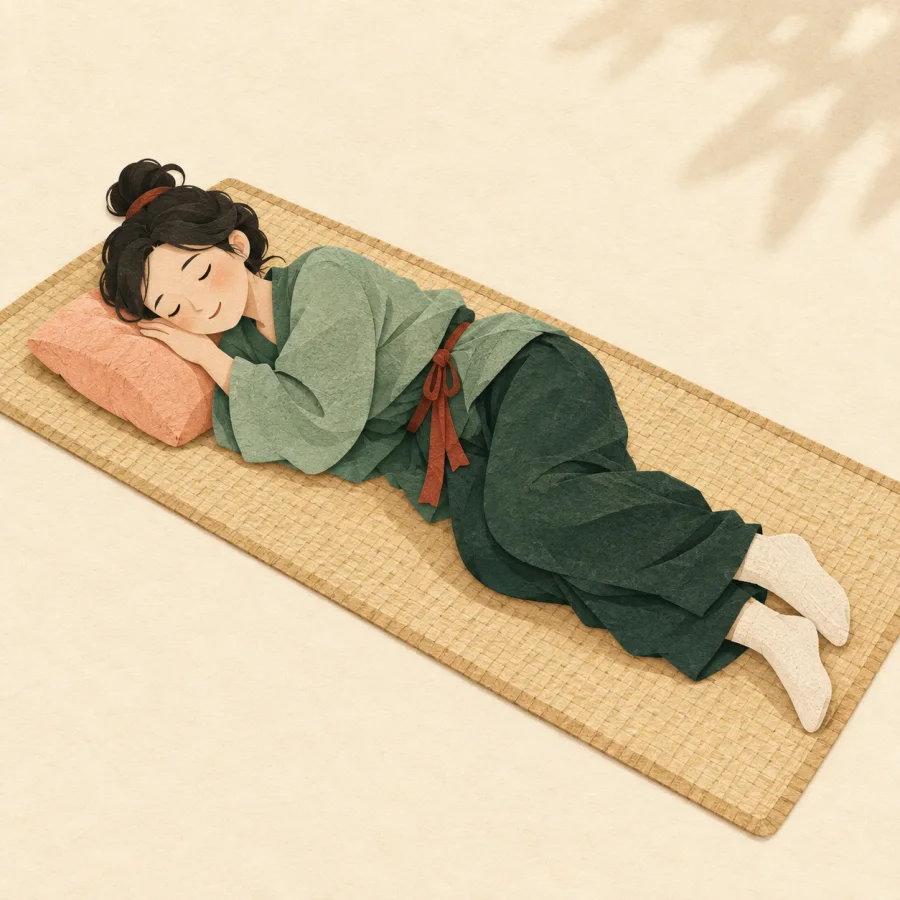
午睡
wǔshuì
cochilo; soneca da tarde
Ideogramas nesta palavra
睡 shuì
- Traços
- 13
- Radical
- 目 — olho
- Composto por
- 目 olho 垂 pendurar
- Como é construído
- Fono-semântico — uma parte indica o sentido, e a outra, o som
Frases de exemplo
- 我要午睡。 Wǒ yào wǔshuì. Quero tirar uma soneca.
- 他在午睡。 Tā zài wǔshuì. Ele está cochilando.
- 午睡很舒服。 Wǔshuì hěn shūfu. Cochilar depois do almoço é muito gostoso.
- 中午十二点是午睡的时间。 Zhōngwǔ shí'èr diǎn shì wǔshuì de shíjiān. Meio-dia é hora de tirar uma soneca.
- 小孩儿午睡了,别说话。 Xiǎoháir wǔshuì le, bié shuōhuà. A criança está dormindo. Fique quieto.
- 夏天天气热,大家都午睡。 Xiàtiān tiānqì rè, dàjiā dōu wǔshuì. No verão, faz calor e todo mundo tira uma soneca.
- 我没时间午睡。 Wǒ méi shíjiān wǔshuì. Não tenho tempo para tirar uma soneca.
- 你怎么不午睡呢? Nǐ zěnme bù wǔshuì ne? Por que você não vai tirar uma soneca?
- 午睡半个小时就够了。 Wǔshuì bàn gè xiǎoshí jiù gòu le. Meia hora de soneca já é suficiente.
- 妈妈午睡前给我讲故事。 Māma wǔshuì qián gěi wǒ jiǎng gùshi. Mamãe me conta uma história antes de tirar uma soneca.