1. Home
  2. HSK 3
  3. Feelings and character

乐

lè

to be happy; to laugh

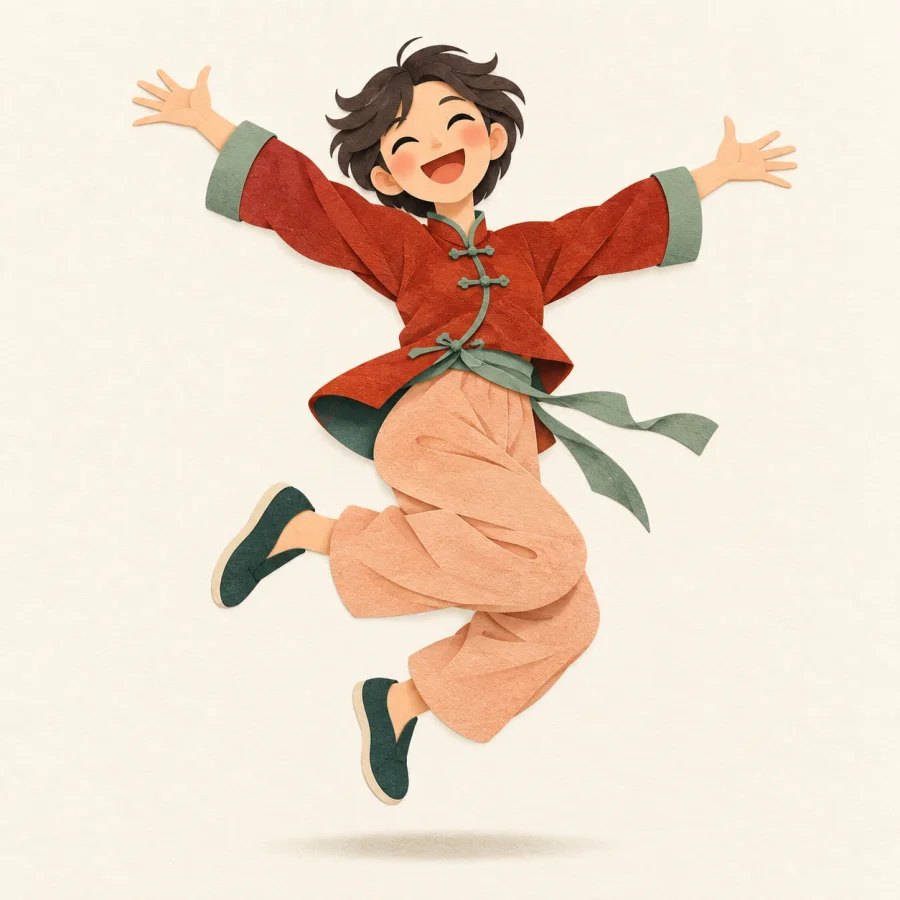
A laughing person jumping with open arms
Memory picture

Character

乐 lè

Strokes
5
Radical
丿 — falling stroke
How it's built
Ideograph — the meaning is built from its parts

Example phrases

  • 大家都乐了。 Dàjiā dōu lè le. Everyone became happy.
  • 你别乐了。 Nǐ bié lè le. Stop laughing.
  • 孩子乐坏了。 Háizi lè huài le. The child is extremely happy.
  • 听到这个消息他乐了。 Tīngdào zhège xiāoxi tā lè le. He was happy when he heard this news.
  • 小朋友看见猫就乐。 Xiǎopéngyǒu kànjiàn māo jiù lè. The child laughs as soon as he sees the cat.
  • 弟弟考试以后乐坏了。 Dìdi kǎoshì yǐhòu lè huài le. My younger brother was overjoyed after the exam.
  • 今天没有什么好乐的。 Jīntiān méiyǒu shénme hǎo lè de. There isn't much to be happy about today.
  • 妈妈看着孩子乐了。 Māma kàn zhe háizi lè le. Mom looked at the child and laughed.
  • 小王今天乐不乐? Xiǎo Wáng jīntiān lè bu lè? Was Xiao Wang happy today?
  • 妹妹看见新衣服就乐。 Mèimei kànjiàn xīn yīfu jiù lè. My younger sister was happy as soon as she saw the new clothes.

Related words

All HSK 3 words →