1. Home
  2. HSK 4
  3. Motion and posture

登

dēng

to climb; to go up

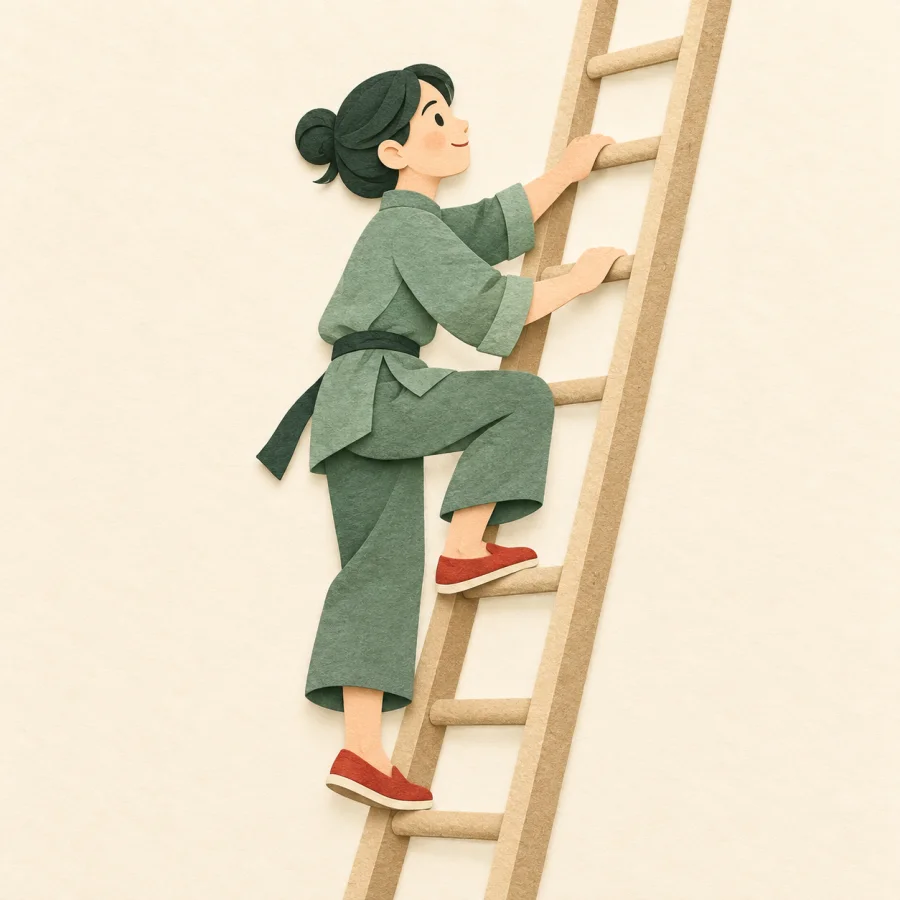
A person climbing a ladder
Memory picture

Character

登 dēng

Strokes
12
Radical
癶 — legs
Made of
癶 legs 豆 beans, peas
How it's built
Phono-semantic — one part hints at the meaning, another at the sound

Example phrases

  • 他登上山顶。 Tā dēng shàng shāndǐng. He climbs to the mountain top.
  • 我登上楼顶。 Wǒ dēng shàng lóudǐng. I climb onto the roof.
  • 请登上台阶。 Qǐng dēng shàng táijiē. Please step up onto the stair.
  • 小王每天登楼锻炼身体。 Xiǎo Wáng měitiān dēng lóu duànliàn shēntǐ. Xiao Wang climbs the stairs every day to exercise.
  • 这座山不高,我们能登上去吗? Zhè zuò shān bù gāo, wǒmen néng dēng shàngqù ma? This mountain isn't high; can we climb it?
  • 下雨以后,别登高山。 Xiàyǔ yǐhòu, bié dēng gāoshān. Don't climb a high mountain after it rains.
  • 老师登上台,开始讲话。 Lǎoshī dēng shàng tái, kāishǐ jiǎnghuà. The teacher went up on stage and began to speak.
  • 他登楼以后觉得有点儿累。 Tā dēng lóu yǐhòu juéde yǒudiǎnr lèi. He felt a little tired after climbing the stairs.
  • 这条路很长,登山的人不少。 Zhè tiáo lù hěn cháng, dēngshān de rén bù shǎo. The path is long, and quite a few people are climbing the mountain.
  • 他们登山时带了水和面包。 Tāmen dēngshān shí dài le shuǐ hé miànbāo. They brought water and bread when they climbed the mountain.

Related words

All HSK 4 words →