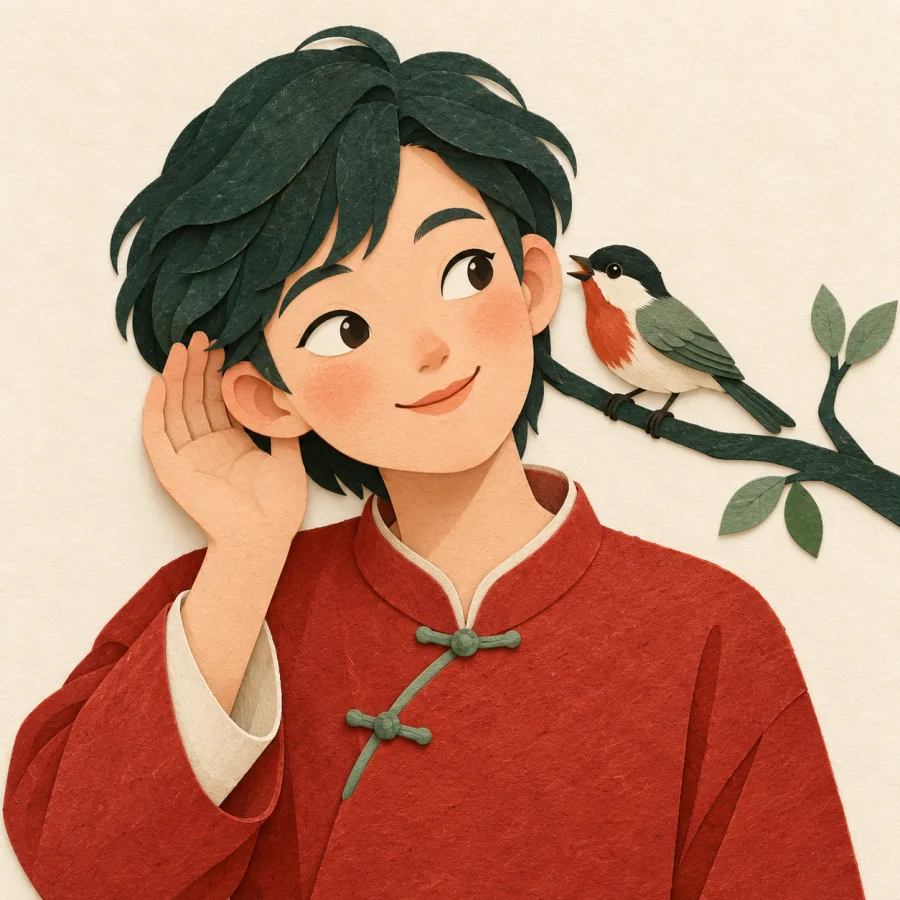
听觉
tīngjué
sense of hearing
Characters in this word
觉 jué
- Strokes
- 9
- Radical
- 见 — to see, to observe, to meet, to appear
- Made of
- ⺍ sprouts 冖 cover 见 to see, to observe, to meet, to appear
- How it's built
- Phono-semantic — one part hints at the meaning, another at the sound
Example phrases
- 长期戴耳机音量过大,可能会逐渐损害听觉。 Chángqī dài ěrjī yīnliàng guò dà, kěnéng huì zhújiàn sǔnhài tīngjué. Using earphones at too high a volume for a long time may gradually damage one's sense of hearing.
- 蝙蝠的听觉非常灵敏,在黑夜里也能找到食物。 Biānfú de tīngjué fēicháng língmǐn, zài hēiyè lǐ yě néng zhǎodào shíwù. Bats have an extremely keen sense of hearing and can find food even in the dark.
- 人老了以后,视觉和听觉都会慢慢变差。 Rén lǎo le yǐhòu, shìjué hé tīngjué dōu huì mànmàn biàn chà. As people get older, both vision and hearing slowly get worse.
Related words
- 好听 hǎotīng pleasant to hear
- 听 tīng to listen, to hear
- 听到 tīngdào to hear
- 听见 tīngjiàn to hear
- 听写 tīngxiě dictation; to write from dictation
- 难听 nántīng unpleasant to hear
- 听讲 tīngjiǎng to listen in class
- 听说 tīngshuō to hear that
- 打听 dǎting to ask around; to find out
- 收听 shōutīng to listen to a broadcast
- 听力 tīnglì listening ability
- 听众 tīngzhòng audience; listeners