1. Home
  2. HSK 3
  3. Where and where to

退出

tuìchū

to leave; to withdraw

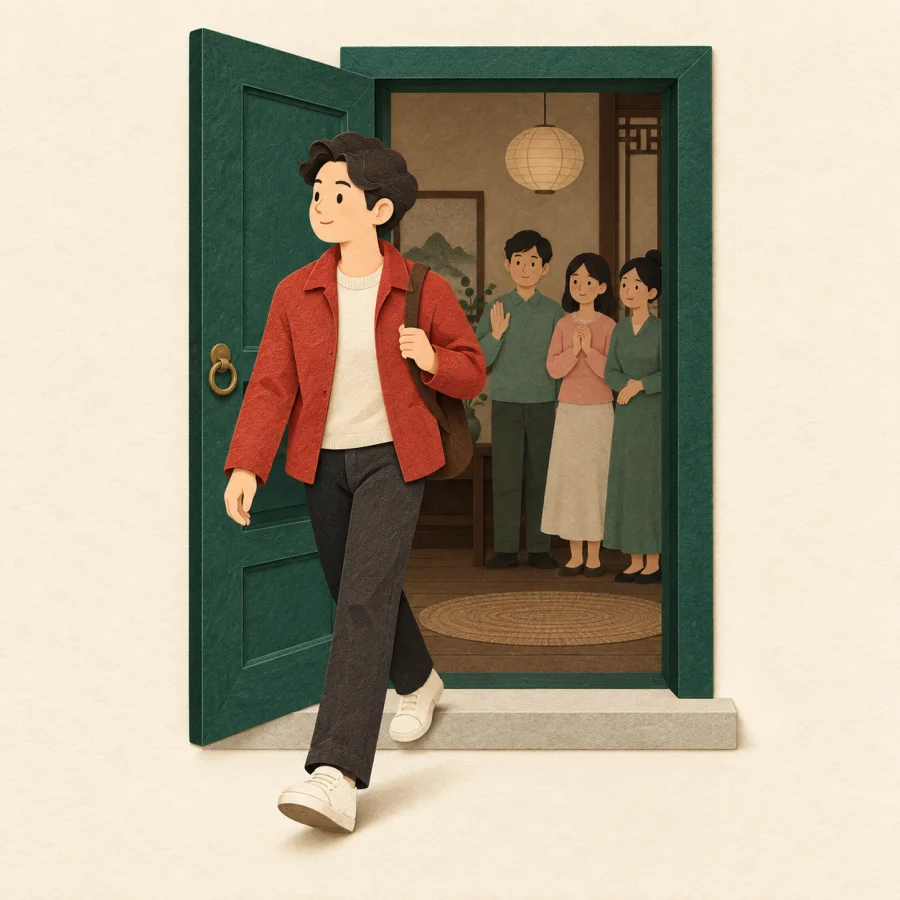
A person leaving through a doorway
Memory picture

Characters in this word

退 tuì

Strokes
9
Radical
辶 — to walk
Made of
辶 to walk 艮 blunt
How it's built
Phono-semantic — one part hints at the meaning, another at the sound

出 chū

Strokes
5
Radical
凵 — container
Made of
屮 sprout 凵 container
How it's built
Ideograph — the meaning is built from its parts

Example phrases

  • 他退出比赛。 Tā tuìchū bǐsài. He withdraws from the competition.
  • 我退出群聊。 Wǒ tuìchū qúnliáo. I leave the group chat.
  • 她退出房间。 Tā tuìchū fángjiān. She leaves the room.
  • 他退出以后我们开始。 Tā tuìchū yǐhòu wǒmen kāishǐ. We started after he left.
  • 姐姐退出了学生团体。 Jiějie tuìchū le xuésheng tuántǐ. My older sister left the student group.
  • 请先退出这个房间。 Qǐng xiān tuìchū zhège fángjiān. Please leave this room first.
  • 小王退出以后谁来帮忙? Xiǎo Wáng tuìchū yǐhòu shéi lái bāngmáng? Who will help after Xiao Wang leaves?
  • 她想退出这个团体。 Tā xiǎng tuìchū zhège tuántǐ. She wants to leave this group.
  • 他退出以后还会回来吗? Tā tuìchū yǐhòu hái huì huílái ma? Will he come back after leaving?
  • 老师请学生退出教室。 Lǎoshī qǐng xuésheng tuìchū jiàoshì. The teacher asked the students to leave the classroom.

Related words

All HSK 3 words →