1. Home
  2. HSK 5
  3. Values and character

胆

dǎn

courage

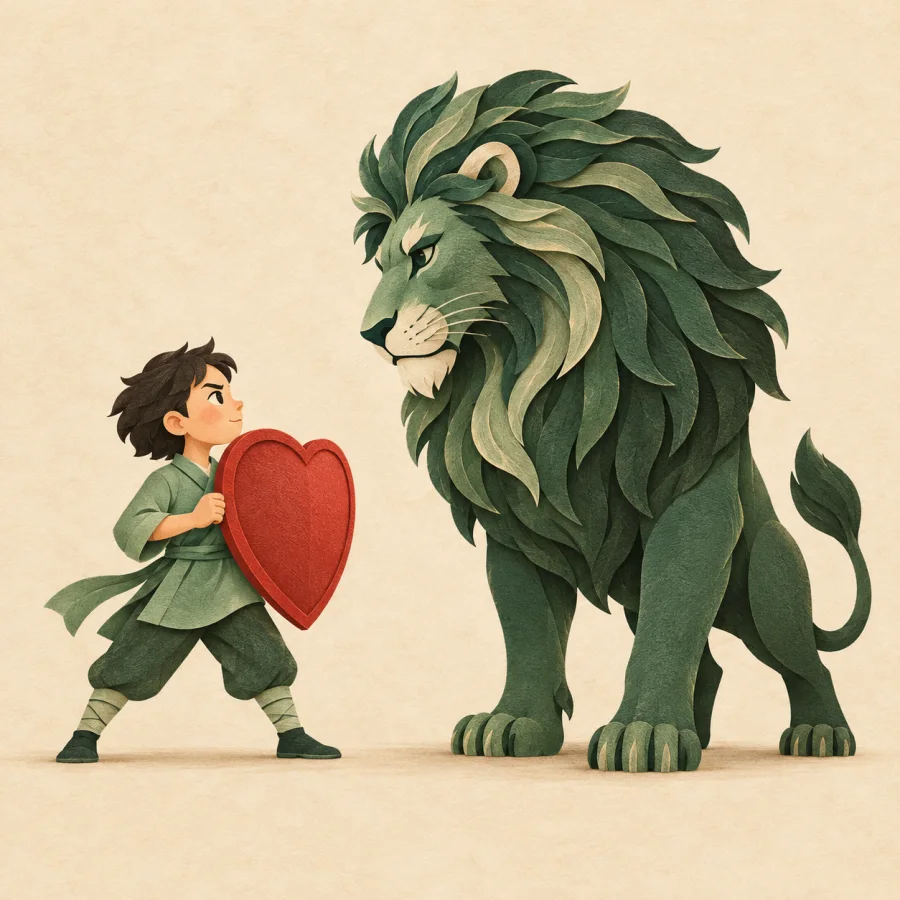
A person facing a lion
Memory picture

Character

胆 dǎn

Strokes
9
Radical
⺼ — meat, flesh
Made of
⺼ meat, flesh 旦 dawn
How it's built
Phono-semantic — one part hints at the meaning, another at the sound

Example phrases

  • 他很有胆。 Tā hěn yǒu dǎn. He has a lot of courage.
  • 你胆真大。 Nǐ dǎn zhēn dà. You are really brave.
  • 我没这个胆。 Wǒ méi zhège dǎn. I do not have that courage.
  • 王明没胆在大家面前唱歌。 Wáng Míng méi dǎn zài dàjiā miànqián chànggē. Wang Ming doesn't have the courage to sing in front of everyone.
  • 别怕你胆子比你想的更大。 Bié pà nǐ dǎnzi bǐ nǐ xiǎng de gèng dà. Don't be afraid; you're braver than you think.
  • 她胆子小却敢一个人旅行。 Tā dǎnzi xiǎo què gǎn yí ge rén lǚxíng. She's timid, yet she dares to travel alone.
  • 她鼓起胆子问老师一个问题。 Tā gǔqǐ dǎnzi wèn lǎoshī yí ge wèntí. She worked up the courage to ask the teacher a question.
  • 他胆子不大,却愿意试一试。 Tā dǎnzi bú dà, què yuànyì shì yí shì. He isn't very brave, but he's willing to give it a try.
  • 你胆真大,敢在台上唱歌。 Nǐ dǎn zhēn dà, gǎn zài táishàng chànggē. You're so brave to sing on stage.

Related words

All HSK 5 words →