1. Home
  2. HSK 5
  3. Law and order

偷

tōu

to steal

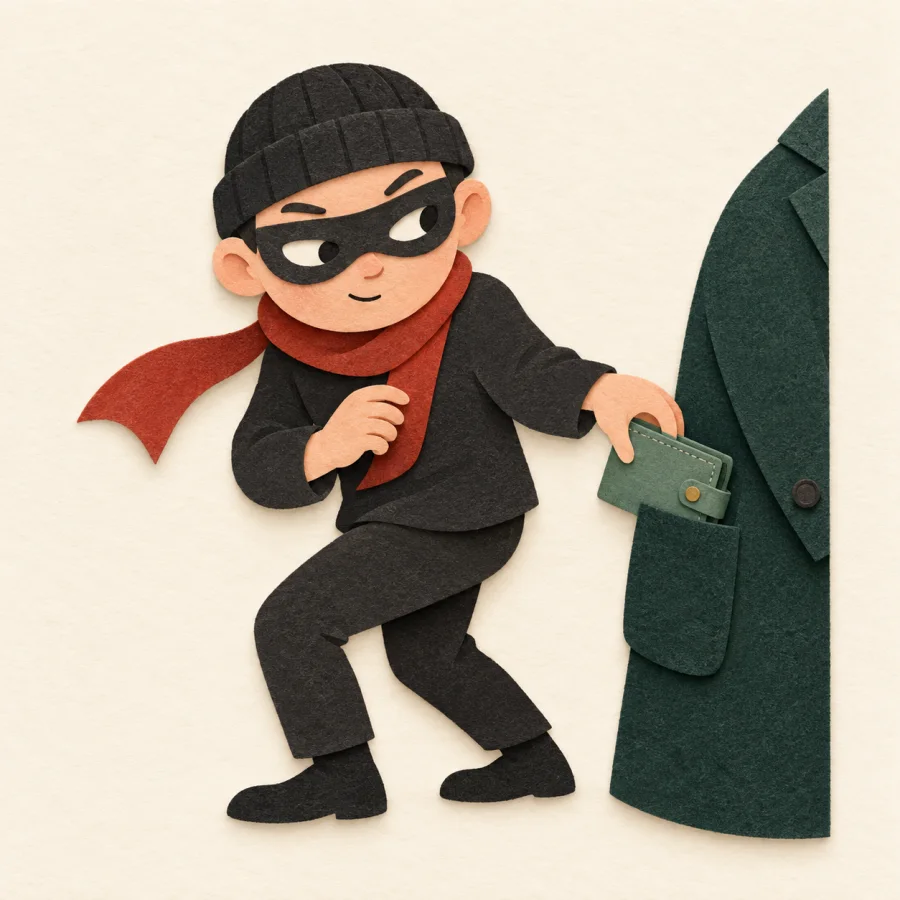
A thief taking a wallet
Memory picture

Character

偷 tōu

Strokes
11
Radical
亻 — man, person
Made of
亻 man, person 俞 to consent, to approve
How it's built
Phono-semantic — one part hints at the meaning, another at the sound

Example phrases

  • 他偷了苹果。 Tā tōu le píngguǒ. He stole an apple.
  • 不要偷东西。 Bú yào tōu dōngxi. Do not steal things.
  • 小偷偷钱包。 Xiǎotōu tōu qiánbāo. The thief steals a wallet.
  • 小王没钱,也不会偷东西。 Xiǎo Wáng méi qián, yě bú huì tōu dōngxi. Xiao Wang has no money, but he wouldn't steal things.
  • 小偷在商店偷东西,被人看见了。 Xiǎotōu zài shāngdiàn tōu dōngxi, bèi rén kànjiàn le. Someone saw the thief stealing things in the shop.
  • 那个人为什么要偷钱包? Nàge rén wèishénme yào tōu qiánbāo? Why does that person want to steal a wallet?
  • 他没有偷钱,是我看错了。 Tā méiyǒu tōu qián, shì wǒ kàn cuò le. He didn't steal the money; I was mistaken.
  • 有人在车上偷了她的钱包。 Yǒu rén zài chē shàng tōu le tā de qiánbāo. Someone stole her wallet on the bus.
  • 老师说不能偷别人的东西。 Lǎoshī shuō bù néng tōu biérén de dōngxi. The teacher said that you mustn't steal other people's things.
  • 小偷想偷手机,朋友马上叫人。 Xiǎotōu xiǎng tōu shǒujī, péngyou mǎshàng jiào rén. The thief tried to steal a phone, and my friend called for help right away.

Related words

All HSK 5 words →